 Vera’s Roofing
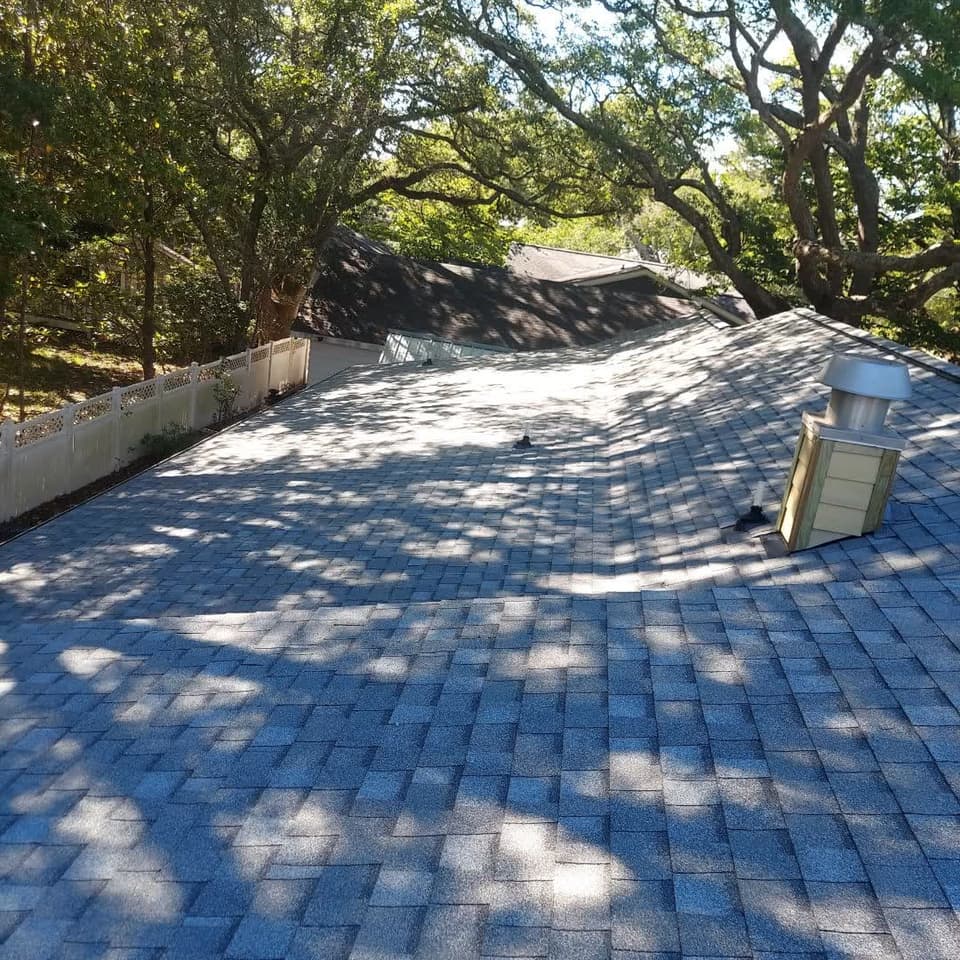
Vera's Roofing inspects roofs in Boiling Spring Lakes and across Brunswick and New Hanover counties, and the inspection is free. It includes photos and notes, so you can see what we saw without going up a ladder yourself. Call 910.228.8034 or request a free roof inspection.
If your house sits under pines, fall is when they drop their older needles. Here's what needles, limbs and shade do to a shingle roof, what you can check from the ground, and when it's worth having us take a look.
Why needles end up on roofs in Boiling Spring Lakes
Boiling Spring Lakes is surrounded by longleaf pine habitat. The state's Boiling Spring Lakes Plant Conservation Preserve covers more than 6,000 acres, and the N.C. Department of Agriculture describes it as "sort of donut-shaped around the City of Boiling Spring Lakes." The preserve supports several kinds of longleaf pine savanna and flatwoods.
Pines do shed. The N.C. Forest Service explains that pine needles in North Carolina usually live for two growing seasons, and the trees drop the older ones in the fall. After a windy day, you may find "a blanket of yellow needles" under your pines.
What needles, limbs and shade do to a shingle roof
Valleys and gutters slow down. A valley is the channel where two roof slopes meet, so water from both sides runs through it. Malarkey Roofing Products' maintenance guidelines say leaves and evergreen needles should be cleared from roofs, valleys and especially gutters, and that nothing should hinder water draining through valleys, into gutters and off the roof. The National Roofing Contractors Association (NRCA) also points to valleys, gutters and drains as the places where debris tends to collect and limit drainage.
Shade keeps slopes damp. The Asphalt Roofing Manufacturers Association (ARMA) says moss tends to grow on roof slopes that get less direct sun and stay damp longer, and that overhanging branches add shade and drop debris that holds in moisture. Moss matters because it can lift or curl the leading edges of shingles, which raises the risk of shingles blowing off in wind. In severe cases it can push water sideways into the roof deck or cause leaks.
Limbs rub and drop. Malarkey notes that overhanging branches can drop leaves and limbs, give pests a path onto the roof, and scrape the roof during storms.
Black streaks are usually cosmetic. Dark streaks on shingles are usually algae, not dirt or mold. ARMA says there is no scientific evidence that algae damages asphalt shingles, although it does change how the roof looks. Moss is the growth to take seriously.
Dry weather is one more reason to keep the roof clear
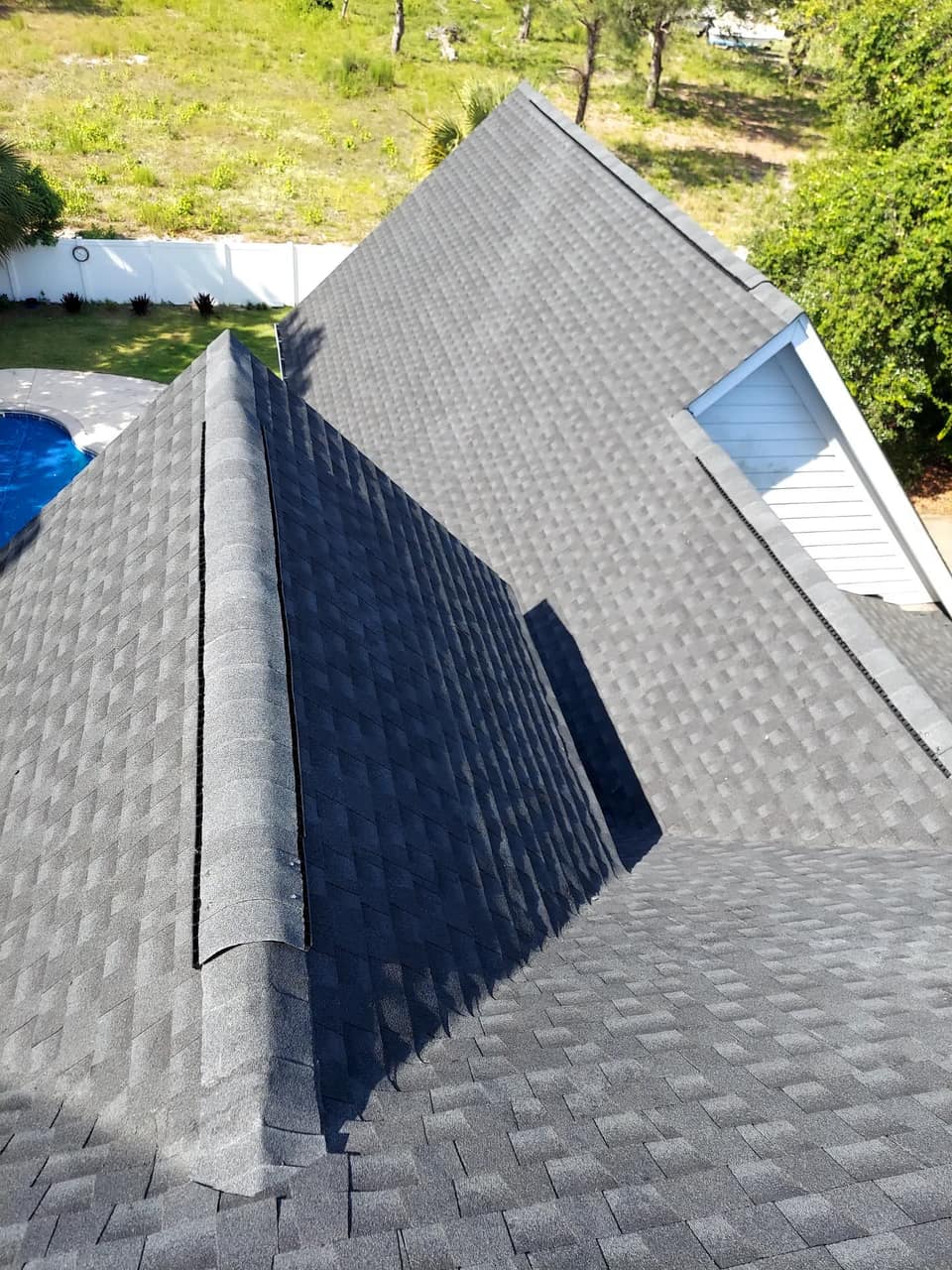
Dry needles and leaves can burn. NFPA's Firewise guidance says wind-blown embers can ignite dry debris on roofs and in gutters, and the flames can reach the roof edge and siding even on a Class A fire-rated roof. NFPA recommends clearing roof and gutter debris at least twice a year and removing branches that hang over the roof.
Fire has come close before. In May 2025, the Sunset Road Fire in Boiling Spring Lakes burned 1,331 acres, and the N.C. Forest Service determined it started from a debris burn.
That doesn't mean your roof is at risk. It does mean clear valleys and a clean roof edge are worth checking before winter.
When to have your roof checked
NRCA recommends roof inspections at least twice a year, preferably in spring and fall, plus after severe weather such as a hurricane, tornado or hailstorm. The Atlantic hurricane season runs through Nov. 30. If a storm has already come through, our guide to checking a roof after a storm covers what to look for from the ground, and our hurricane prep guide covers getting ready for the next one.
From the ground or a window, watch for:
- needles or leaves piled up in a roof valley
- moss growing on a shaded slope
- shingle edges that look lifted, curled or split
- a limb resting on or rubbing against the roof
- gutters spilling over during rain
- a new stain on a ceiling
Please stay on the ground. If something looks off, call us and we'll check it.
Clearing needles without hurting the shingles
ARMA recommends clearing roof debris with a leaf blower or a similar non-abrasive method and aiming the air down the slope, so debris doesn't get pushed under shingle edges. It also says never to pressure-wash an asphalt shingle roof, because that causes granule loss and can shorten the roof's life. If moss or algae needs cleaning, ARMA encourages using professionals, since the cleaning process can make a roof slippery.
What you get from a Vera's Roofing inspection
- A free inspection with photos and notes. You see what we saw, without climbing up yourself.
- A clear next step. If something needs fixing, we can talk through roof repair. If the roof is near the end of its life, we can walk you through roof replacement.
- Tarping when needed. If a limb has opened up the roof, we tarp it when needed.
- Shingles and warranty. We install CertainTeed and GAF 30-year shingles. Installs come with our one-year labor-and-materials warranty plus the manufacturer warranties, and we handle permits when they're required.
- Insured work. We carry workers' comp and general liability insurance.
- A verifiable credential. Vera's Roofing is a FORTIFIED Roofer, provider ID R012048.
Live near Boiling Spring Lakes? St. James, Southport and other nearby towns are on our Brunswick County roofing page, and you can see more of our work on our project photos page.
Questions homeowners ask
How often should a roof in Boiling Spring Lakes be inspected?
NRCA recommends at least twice a year, preferably in spring and fall, and again after severe weather like a hurricane, tornado or hailstorm.
Do pine needles hurt a shingle roof?
Needles that collect in valleys and gutters can block drainage, and debris on shaded slopes holds moisture that encourages moss, which can lift shingle edges. Dry needles can also catch wind-blown embers. ARMA, Malarkey and NFPA all recommend clearing roof debris regularly.
Are the black streaks on my roof a problem?
Usually it's cosmetic. ARMA says the dark streaks are typically algae and that there is no scientific evidence algae damages asphalt shingles. Moss is different: it can lift or curl shingle edges.
Should I pressure-wash moss or streaks off my roof?
No. ARMA says never to pressure-wash an asphalt shingle roof because it causes granule loss. Use a non-abrasive method for debris, and use a professional for moss or algae cleaning.
Is your roof inspection free in Boiling Spring Lakes?
Yes. Vera's Roofing offers free roof inspections in Boiling Spring Lakes and across Brunswick and New Hanover counties, and each inspection includes photos and notes.