 Vera’s Roofing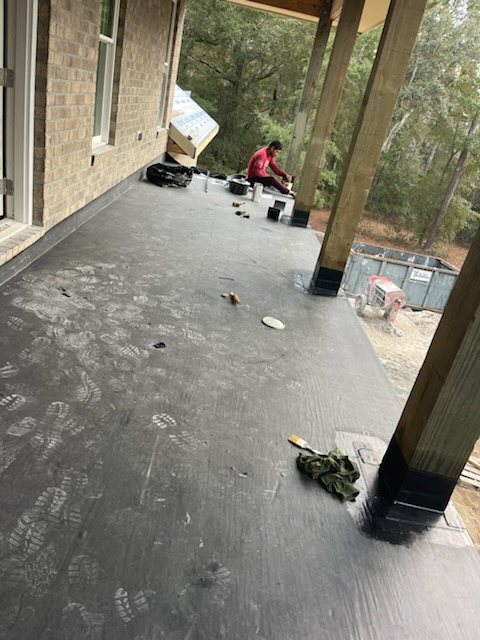
Where flat roofs show up
Most coastal homes have at least one low-slope area.
A house with a shingle main roof can still have a porch, a dormer, an addition, or a deck that drains too slowly for shingles. Those areas are where flat roof leaks tend to start.
The three systems
TPO, EPDM, and Hydro Stop each solve a different problem.
TPO (thermoplastic polyolefin) is a single-ply roofing membrane, usually white or light-colored, with seams that are heat-welded with hot air. Light surfaces reflect more sunlight than dark ones, which is one reason TPO is common on sunny low-slope roofs.
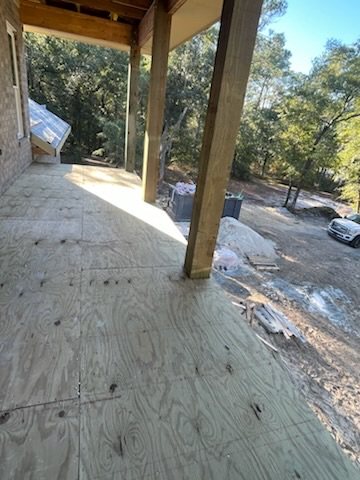
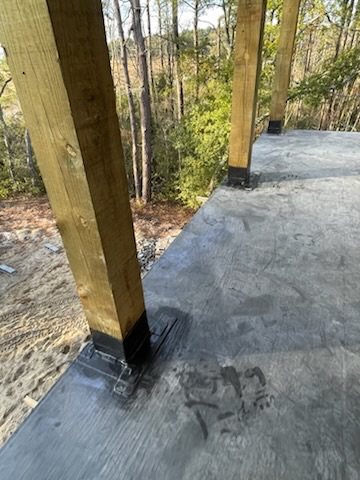
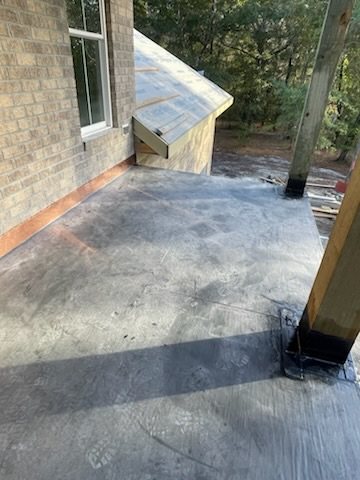
EPDM (ethylene propylene diene monomer) is a synthetic rubber membrane, usually black, with seams joined by tape or adhesive. It stays flexible and is widely used on porches, additions, and deck waterproofing. The EPDM photos in the gallery show surface prep, post and wall transitions, and finished membrane from a real coastal deck job.
Hydro Stop is a fluid-applied roof coating and waterproofing system. It goes on as a liquid and cures into a seamless layer, so it can suit roofs with many corners, penetrations, or awkward shapes. Whether a coating fits depends on the existing surface, its condition, and preparation.
Not offered: Hot-mopped built-up roofing, torch-down, and modified bitumen. If your roof has one of those systems now, the conversation is about which of the three offered systems fits the area.
| Question | TPO | EPDM | Hydro Stop |
|---|---|---|---|
| What it is | Single-ply thermoplastic membrane | Synthetic rubber membrane | Fluid-applied coating system |
| Surface color | Usually white or light | Usually black | Depends on the finish coat |
| How seams are handled | Heat-welded seams | Taped or adhered seams | Cures into a seamless layer |
| Often considered for | Sunny low-slope roofs and business sections | Porches, additions, and deck waterproofing | Complex shapes and many penetrations |
Warning signs
What a flat roof shows before it leaks inside.
- Water still standing roughly two days after rain, or the same low spot holding water every time
- Bubbles or blisters in the membrane, or a soft spot underfoot
- Seams or edges that look lifted, wrinkled, or separated
- Cracks or gaps where the flat area meets a wall, door threshold, or steeper roof
- Drains, scuppers, or gutters at the roof edge that clog with leaves and pine needles
- Stains on the ceiling under a porch roof or under a deck that sits over a room
On the coast, sun, salt air, and wind-driven rain work on flat roofs the same way they work on the rest of the house. Edges and wall transitions take wind, metal trim and fasteners face salt exposure, and slow-draining areas get more water in heavy rain. Gutters matter too; see gutter cleaning, guards, and repair if the roof edge overflows.
Repair or replace
A flat roof leak is not automatically a new roof.
Repair is often enough when: the leak traces to one seam, edge, penetration, or wall transition, and the surrounding membrane and the deck underneath are still sound.
Replacing the area makes sense when: the membrane is splitting or blistering in many places, leaks keep returning in different spots, or the decking under the roof is wet or soft.
An inspection describes roof condition; it does not confirm insurance coverage or a claim result. For help deciding on a steeper roof, read the coastal NC repair-or-replacement guide.
What to send
What to send for a flat roof review
One short note is enough to start. Photos help when they show the real condition and are taken from a safe spot.
- Town and property type
- Where the flat or low-slope area is: porch, addition, deck, or business roof section
- Whether water is coming in now, and where it shows up inside
- Which system is there now, if you know it
- Photos of standing water, seams, edges, or wall transitions
Questions
Flat roof questions, answered plainly.
Which flat roof systems does Vera's Roofing install?
Three: TPO, EPDM, and Hydro Stop. Vera's Roofing installs and repairs those systems on flat and low-slope roof areas such as porch roofs, additions, covered decks, and small business roof sections.
Do you offer hot-mopped, torch-down, or modified bitumen flat roofs?
No. Hot-mopped built-up roofing, torch-down, and modified bitumen are not offered. The flat and low-slope systems offered are TPO, EPDM, and Hydro Stop.
Can a leaking flat roof be repaired instead of replaced?
Often, when the problem is limited to a seam, edge, penetration, or wall transition and the rest of the membrane and the deck below are sound. Widespread splitting, repeated leaks, or wet decking usually move the conversation toward replacing that roof area.
Is standing water on a flat roof a problem?
A little water right after rain is normal on a low-slope roof. Water that is still standing about two days after rain points to a drainage, slope, or low-spot issue worth reviewing, because ponding speeds up wear and finds weak seams.
Do you work on decks that sit over living space?
Yes. Covered decks and low-slope areas over rooms below need membrane-style waterproofing. The EPDM photos in the gallery come from one coastal deck waterproofing job.
What should I send for a flat roof review?
Your town and property type, where the flat or low-slope area is, whether water is coming in now, which system is there now if you know it, and photos of standing water, seams, edges, or interior stains taken from a safe spot.
Areas we serve
Flat roof repair and installation across Brunswick and New Hanover counties.
TPO, EPDM, and Hydro Stop work is available in every Brunswick and New Hanover County town below and in the unincorporated communities of both counties. Choose a town for local context, or see the full list of towns and communities.
Brunswick County
Bald Head Island
Belville
Boiling Spring Lakes
Bolivia
Calabash
Carolina Shores
Caswell Beach
Holden Beach
Leland
Navassa
Northwest
Oak Island
Ocean Isle Beach
Sandy Creek
Shallotte
Southport
St. James
Sunset Beach
Varnamtown
Plus unincorporated communities including Supply, Winnabow, Ash, Longwood, Grissettown and Boone’s Neck. All Brunswick County places.
New Hanover County
Plus Castle Hayne, Ogden, Porters Neck, Murraysville, Myrtle Grove, Masonboro and Monkey Junction. All New Hanover County places.
Flat or low-slope roof concern?
Request a flat roof inspection.
Share the town, property type, and which porch, deck, addition, or roof section is giving you trouble.