Quick answer
When the roof leaks during heavy rain, handle the inside first.
Move people away from wet ceilings, light fixtures, and sagging drywall. If you can do it safely, place a bucket or pan under the drip, move furniture and valuables, and use towels or plastic to limit water spread.
Do not climb on the roof during rain, wind, or lightning. A leak that shows up in a storm can come from shingles, flashing, roof valleys, vents, roof edges, gutters, or wind-driven rain. The source is often not directly above the indoor stain.
First steps inside
What to do while the rain is still coming down.
The goal during active rain is not to diagnose the whole roof. It is to reduce interior damage and keep everyone safe until the weather clears.
Keep people clear
Stay away from sagging ceilings, wet light fixtures, outlets, and rooms where water is spreading near electrical items.
Catch and redirect water
Use a bucket, pan, towel, or plastic bin if you can place it safely. Move rugs, furniture, electronics, and keepsakes out of the drip path.
Document what changed
Take photos or short video of the drip, stain, room, roofline from the ground, and any gutter overflow. Note the date and which side of the home is affected.
Call when water is active
If water is actively coming in, call first and send photos when safe. Do not wait for several more storms to see if the stain grows.
If water is near electrical fixtures, a ceiling is bulging, or the area feels unsafe, avoid the room and use the appropriate safety professional before trying to clean or inspect anything yourself.
Leak clues
What the leak may point to.
| What you notice | What it may mean | Recommended action |
|---|---|---|
| Drip or stain appears only during heavy rain | Wind-driven rain, flashing, roof edge, valley, or gutter issue | Request a Roof Inspection |
| Water near a wall, chimney, vent, or skylight area | Transition or flashing detail may need review | Ask About Roof Repair |
| Gutters overflow while the leak is happening | Backed-up gutter, downspout, or roof-edge water path | Review Gutter Cleaning and Guards |
| Shingles are missing, lifted, or loose after wind | Storm or wind changed the roof surface | Use the Storm Inspection Checklist |
| Leak returns in different rooms or after many storms | Broader roof condition or replacement planning may be involved | Compare Repair and Replacement Signs |
| Flat or low-slope section holds water | Membrane, drainage, or low-slope waterproofing detail may need review | Ask About Low-slope Roof Areas |
What not to do
Do not climb onto a wet roof to find the leak.
A wet roof is dangerous, especially during wind, lightning, or fast-moving coastal rain. The roof surface can be slick, debris can hide weak spots, and the visible leak path may not match the indoor drip location.
- Do not walk the roof during rain or wind.
- Do not pull shingles, flashing, or vents apart yourself.
- Do not assume a ceiling stain means the leak is directly above it.
- Do not cover up interior staining before taking photos.
- Do not ignore a leak just because it stops when the rain slows.
Possible leak sources
Heavy rain can expose several weak points.
A roof leak during heavy rain is not always caused by one missing shingle. Water can enter where surfaces meet, where water slows down, or where wind pushes rain under vulnerable details.
Shingles and roof surface
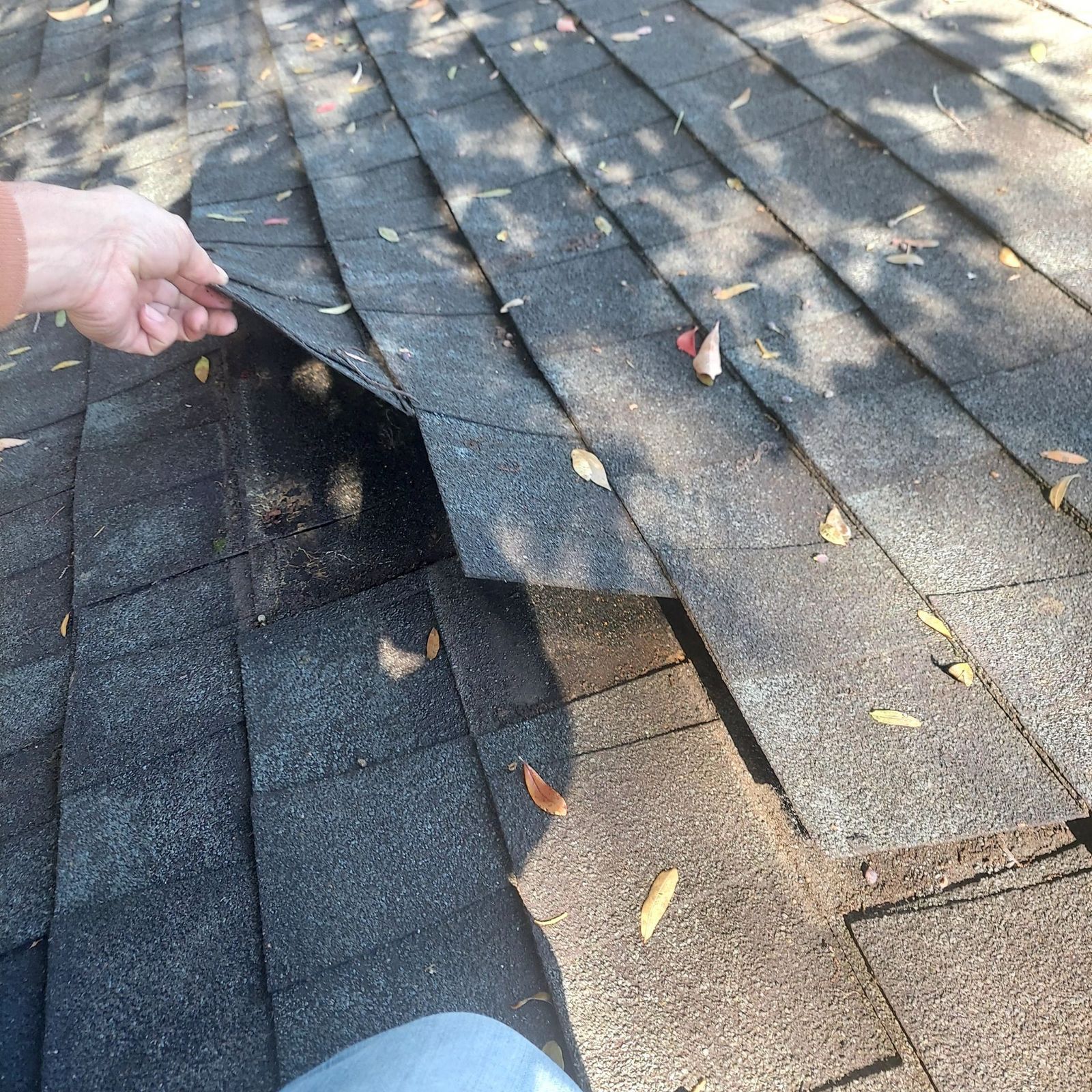
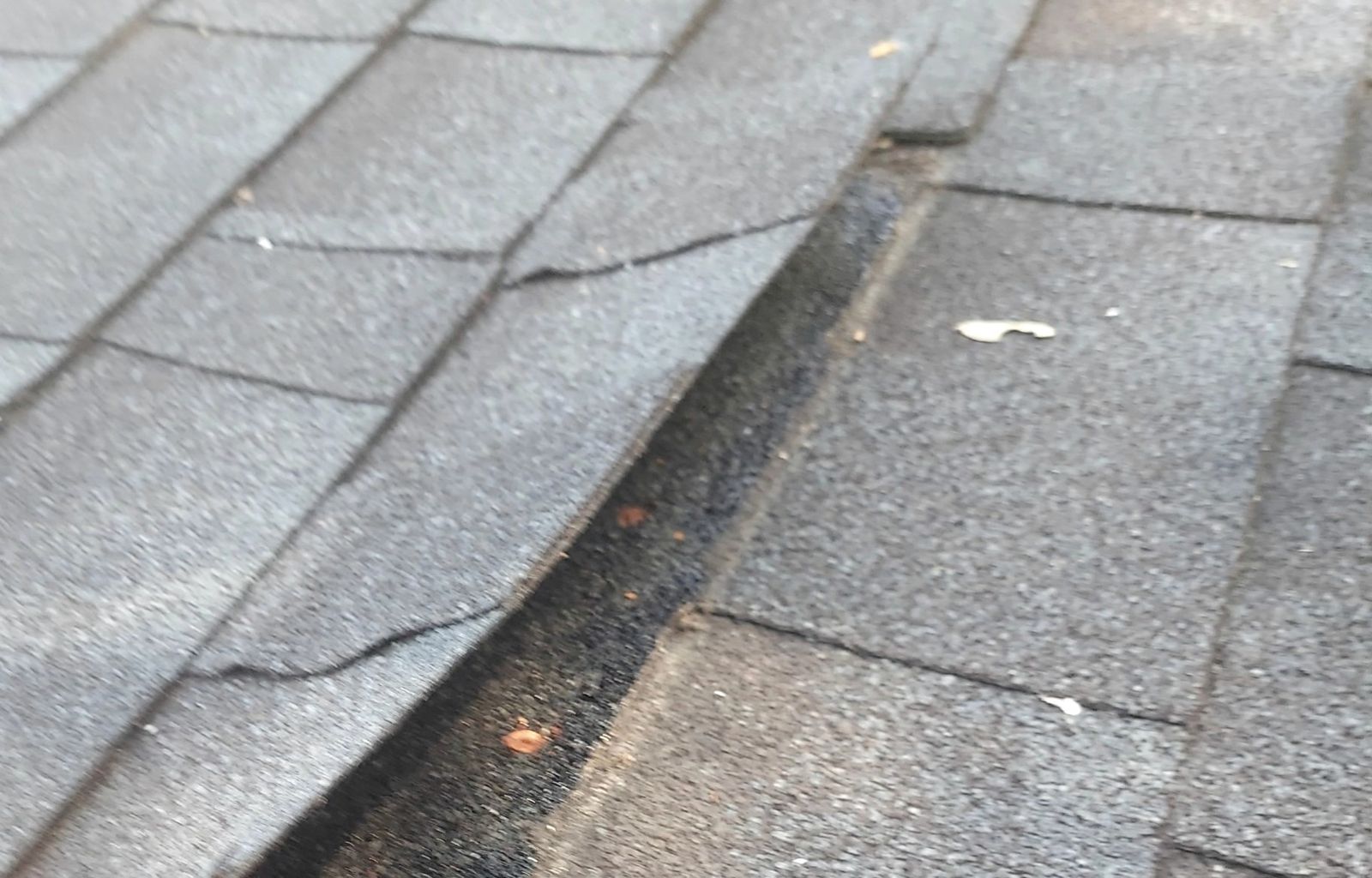
Missing, lifted, cracked, or worn shingles can let wind-driven rain reach areas that should stay covered.
Flashing and transitions
Walls, chimneys, vents, dormers, roof-to-wall areas, and other transitions need tight water-control details.
Valleys and roof edges
Valleys and edges handle a lot of water at once. Debris or weak detailing can make heavy rain show up inside.
Gutters and downspouts
Clogged gutters can back water up at the roof edge or dump water against places that were never meant to take it.
Coastal NC rain factors
Wind, fast rain, salt air, and debris can make leaks harder to read.
In Brunswick County, Wilmington, New Hanover County, and nearby coastal communities, heavy rain often arrives with wind and debris. That can push water sideways, fill gutters quickly, move loose roof material, and expose small gaps that stayed hidden during normal rain.
After the weather clears, start with a practical roof and water-path review: roof surface, flashing, valleys, vents, roof edges, gutters, downspouts, and any interior stain pattern.
Before you call
What to photograph after the leak.
Photos are optional, but they help the first conversation. Take them only from safe places.
- The active drip, bucket, stain, or wet area indoors.
- The full ceiling or wall around the stain, plus one closer photo.
- The outside roofline from the ground on the same side of the home.
- Any visible missing, lifted, loose, or different-looking shingles.
- Gutters overflowing, downspouts backing up, or water pooling near the wall.
- The town, property type, approximate storm time, and when the leak started.
Repair or replacement?
A heavy-rain leak does not automatically mean full replacement.
One leak may point to a limited repair. Repeated leaks, widespread shingle wear, older roof age, or problems showing up in different places may make replacement planning part of the conversation.
The right first question is simple: what changed, where did water appear, and what does the roof look like once it is safe to inspect?
Local roof leak help
Roof leak checks for Brunswick County, Wilmington, and nearby coastal communities.
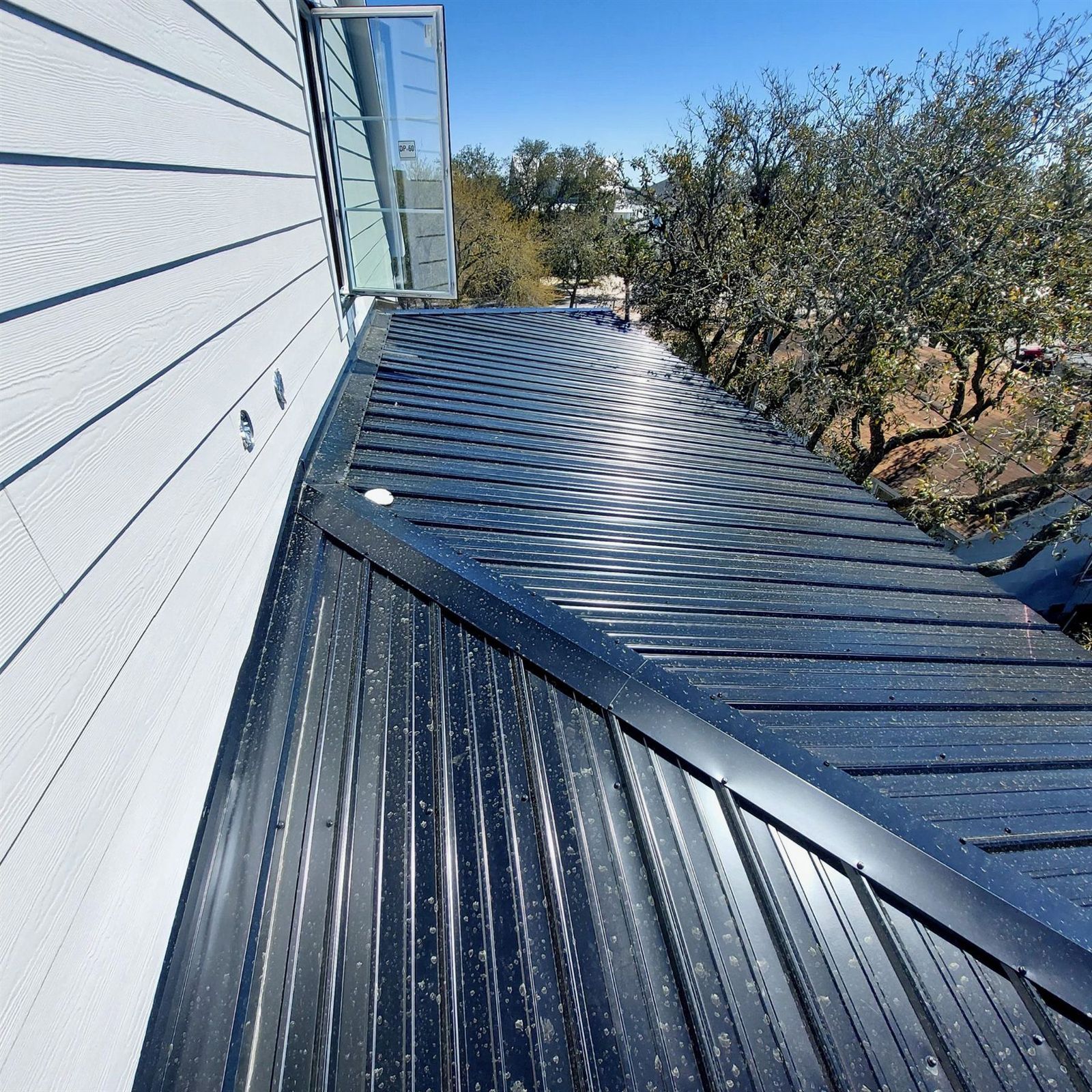
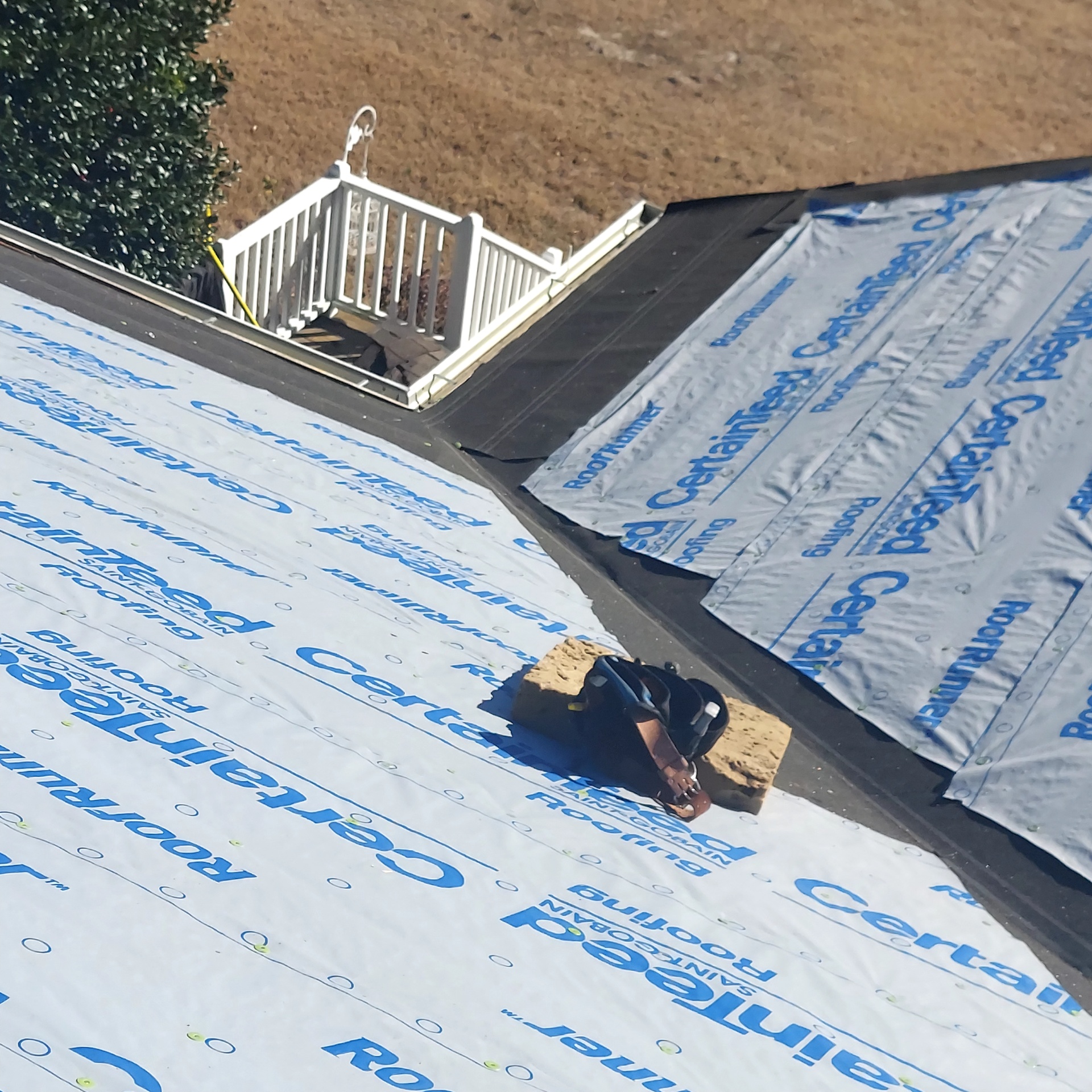
Vera's Roofing helps homeowners, rental property owners, and business property owners talk through active leak concerns, storm inspection needs, roof repair questions, replacement planning, gutter overflow, and low-slope waterproofing concerns across Brunswick County, Wilmington, New Hanover County, and nearby coastal North Carolina.
If you are not sure whether the issue is roof, flashing, gutter, drainage, or low-slope related, start with what you can see from a safe location, then Request an Inspection with the details you have.
FAQs
Common questions about roof leaks during heavy rain.
Should I climb on the roof to stop a leak during rain?
No. A wet roof is dangerous, and storm conditions make it worse. Stay inside or on the ground, protect the area if you can do it safely, and wait for safe conditions before any roof check.
What if the leak stops when the rain slows?
Still document it. A leak that only appears during heavy rain can point to wind-driven rain, flashing, roof-edge, gutter, valley, or drainage issues.
Can clogged gutters cause a roof leak?
They can contribute to water problems near roof edges, fascia, walls, and soffits. A gutter problem can also look like a roof leak from inside the home.
Is a ceiling stain always directly under the leak?
No. Water can travel along framing, insulation, and roof details before it shows up indoors. The visible stain is a clue, not a full diagnosis.
What should I tell Vera's Roofing first?
Share your town, property type, where water appeared, when the rain started, whether water is still coming in, and any safe photos of the stain, room, roofline, gutters, or shingles.
Does one roof leak mean I need a new roof?
Not automatically. One limited leak may be repairable. Repeated leaks, widespread wear, older roof age, or multiple problem areas may justify a replacement-planning conversation.